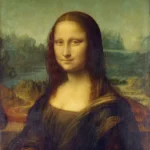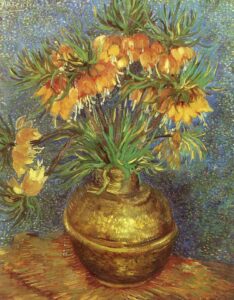

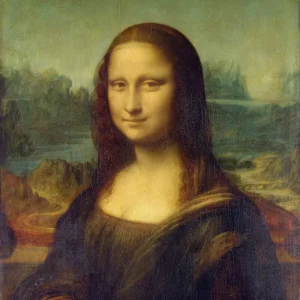
Hand-painted reproduction or print?
In a photo online the two can look almost the same. On a wall they don’t. A canvas print is made by a machine in minutes from a photograph of the painting. A hand-painted reproduction is built up in oil, layer by layer, by a painter copying the original by eye. That difference shows in the surface, in how the colour holds up close, and in the price.
How each one is made
A canvas print, often sold as a giclée, is an inkjet print: fine drops of pigment ink sprayed onto canvas from a digital file. The surface is flat. Every copy printed from the same file is identical, and the colour depends on the photograph and the printer.
A hand-painted reproduction starts as a blank canvas. The painter draws the composition, blocks in the main colours, then works up the detail with brushes, in oil, the same material most of the originals were painted in. Thick passages stand up from the surface and thin ones let the weave of the canvas show through. No two come out exactly alike.
What you notice on the wall
Texture is the first thing. Turn on a lamp to one side of a painted copy and every stroke throws a small shadow. A print stays flat, or carries a texture pressed into it that repeats the same way across the whole surface.
Up close, oil colour has depth because it sits in layers, some of them partly transparent. A print can look right from across the room and turn flat when you walk up to it.
Prints sold as paintings
Some listings describe a print as “hand-embellished”, “hand-finished” or “textured”: a print with a few strokes of clear gel or paint added on top to imitate brushwork. Others put “oil painting” in the title and “canvas print” in the details. A few checks settle it:
- Read the materials line. “Oil on canvas, painted by hand” is clear. “Giclée”, “canvas print”, “textured print” and “hand-embellished” all mean a print.
- Ask for a close photo of the actual painting in side light. Painted surfaces show raised, uneven strokes. Under a magnifier, a print shows a fine, regular pattern of dots.
- Look at the delivery time. Oil paint takes days to dry, so a painting that ships two days after you order was not painted for you.
- Look at the price of the large sizes. Painting a big canvas by hand takes days of skilled work. A very low price for a large painting almost always means a print.
Which one makes sense
A print is fine for a short stay: a rental, a student room, a picture you expect to change next year. A painted copy makes sense where you will look at it every day, or for a gift meant to stay in the family.
Every OneArtSource reproduction is painted by hand in oil, started after you order, and you approve a photo of the finished painting before it ships. How our paintings are made