Van Gogh's Cypresses
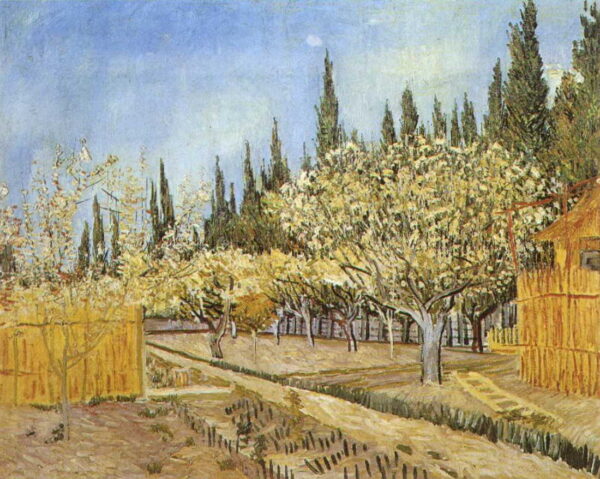
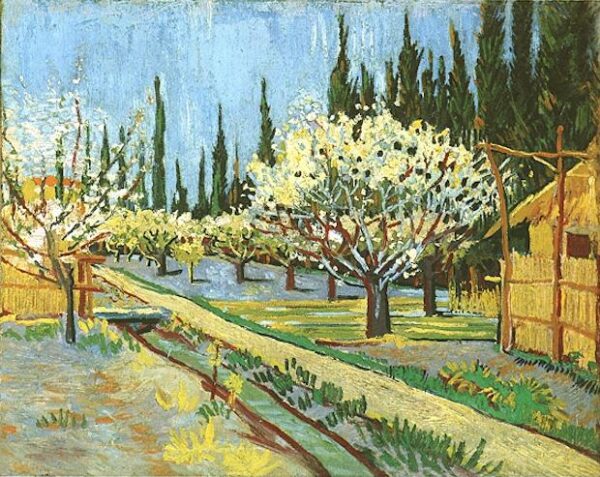
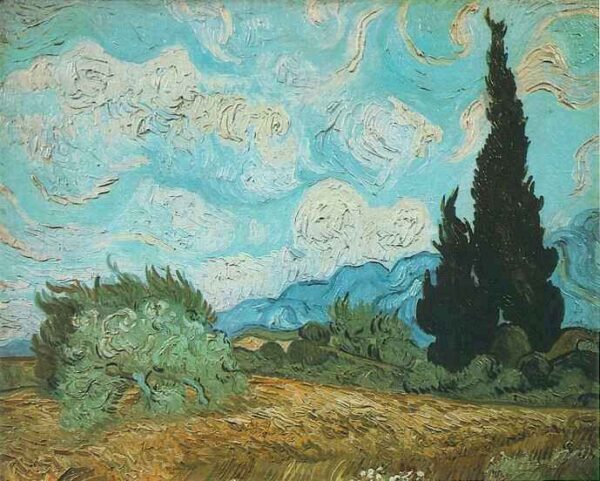
Van Gogh became fascinated by the dark cypress trees of Provence in the summer of 1889 and made them the centre of some of his best known paintings.
Looking for a painting that is not on this page? Search it by title. If it’s public domain, we paint it.
About the series
In June 1889, at Saint-Rémy-de-Provence, Vincent van Gogh wrote to his brother Theo that the cypresses were always on his mind. He compared their shape to an Egyptian obelisk and set out to paint them as he had painted the sunflowers.
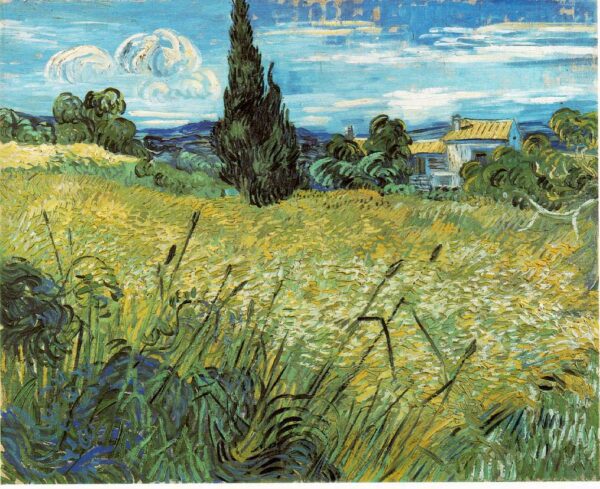
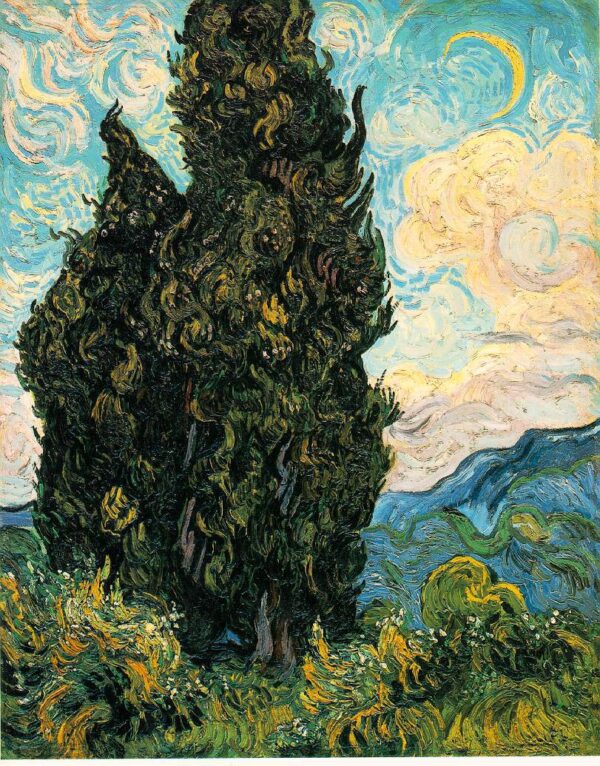
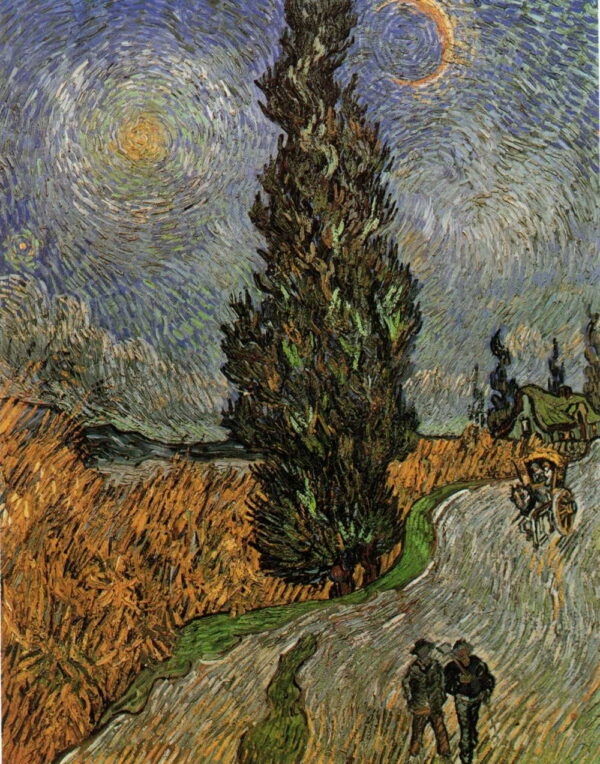
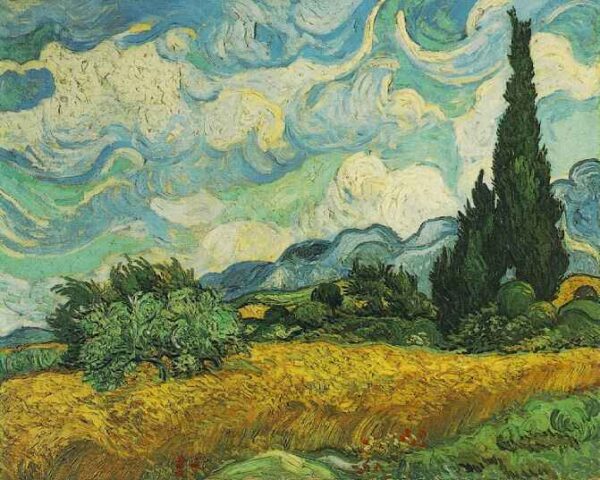
Over the following months the tall flame-shaped trees appear again and again: standing alone against a swirling sky, beside a golden wheat field, or on a road at night under a crescent moon. The Metropolitan Museum of Art in New York holds both Cypresses and Wheat Field with Cypresses from the summer of 1889, and the National Gallery in London holds a later version of the wheat field. A cypress also rises in the foreground of The Starry Night, now at the Museum of Modern Art in New York. Road with Cypress and Star, from May 1890, is in the Kröller-Müller Museum.
Upright cypress paintings suit narrow walls. Wheat Field with Cypresses is a wide landscape for a larger space.