

Post-Impressionism · 19th century
Hand-painted reproduction after
Paul Gauguin
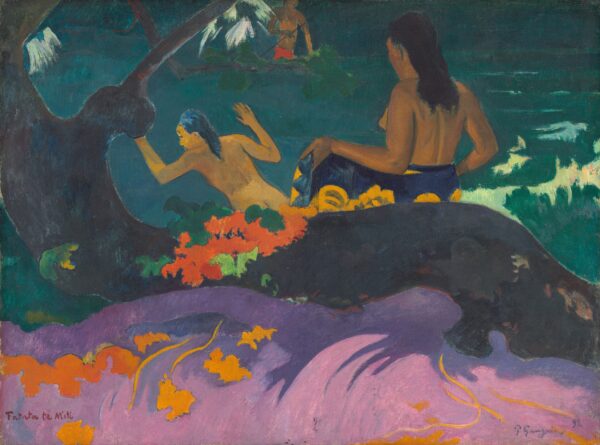
Fatata te Miti (By the Sea)
These sizes keep the painting’s true proportions. Want a different shape? Email us and we’ll adapt it.
Framing never costs more than the painting. Compare rolled, stretched and framed
- Hand-painted
- Photo before it ships
- Free shipping
- 90-day returns
Reviews
What people say when it arrives
After you order
What happens next
The painting
Fatata te Miti (By the Sea)
Fatata te miti means By the sea. Gauguin painted it in Tahiti in 1892: two women undress and run into the waves, while a fisherman stands in the water with a spear. The sand and sea are laid in flat bands of pink, green and violet. It is in the National Gallery of Art in Washington.Your copy starts on a blank canvas after you order and is painted in oil by hand. You approve it from a photo before it leaves us.
About the original
- Painted in
- 1892
- Original size
- 67.9 × 91.5 cm (26.7 × 36 in)
- Where it hangs
- National Gallery of Art, Washington
Detail
Specification
| Medium | Oil on canvas |
| Painting size | |
| Framed size | |
| Frame | |
| Orientation | |
| Dominant colour | |
| Arrives | Rolled, ready for local framing |
| Packed | Rolled in a protective tube |
| Turnaround | 3 to 4 weeks, then delivery |
The hand behind it
Paul Gauguin
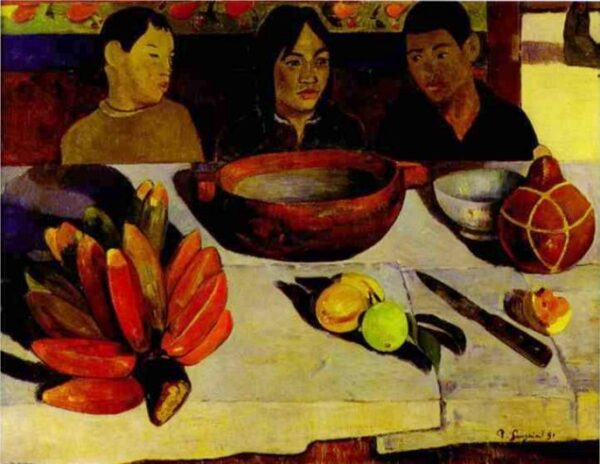
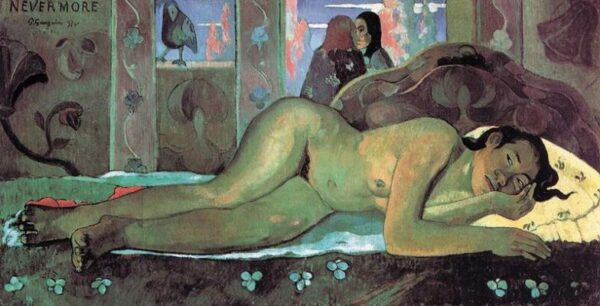
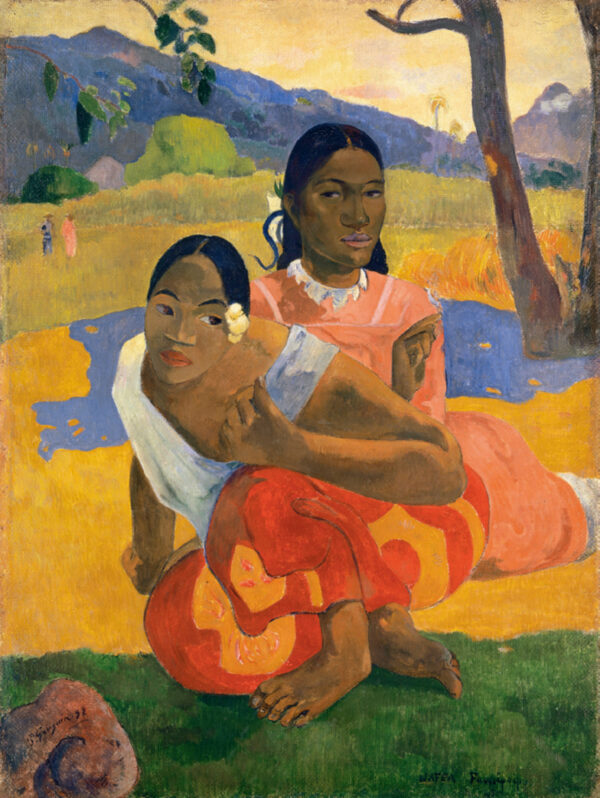
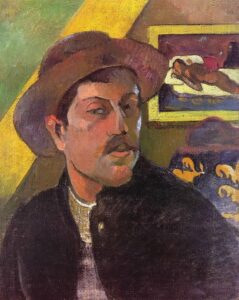
Gauguin left a career in stockbroking, then left his family, then left Europe, and built a body of work out of the going. The Tahitian paintings are the ones that sell reproductions, and they are also the ones now argued over hardest, given what his letters and behaviour there record. The painting itself broke with Impressionism deliberately. Flat areas of unmodulated colour, heavy outlines, space compressed. He called it synthetism, worked it out at Pont-Aven in Brittany, and pushed it further once he reached the Pacific. The stay with Van Gogh in Arles lasted nine weeks and ended with the razor and the ear. He spent his final years in the Marquesas, in poor health and in trouble with the colonial authorities. Where Do We Come From? What Are We? Where Are We Going?, painted in 1897, was intended as a summary before an attempted suicide.
All paintings by this artistLooking after it
Care and hanging
Before you buy
Questions
How is the finish priced?
The price you see is the painting at the size you chose, in the finish you chose, and it updates as you change either. Rolled arrives in a protective tube, ready for local framing. Stretched arrives on wooden bars, ready to hang. Framed arrives in its frame, ready to hang. Stretched and framed go up to 60 × 90 cm (24 × 36 in); larger paintings travel rolled.
How long does it take?
Painting begins after you order and takes 3 to 4 weeks, including drying and the photo you approve. Delivery then takes 4 to 10 working days to most countries. More on delivery times.
Will it look exactly like the original?
It is painted by a person, so no. Brushwork varies between copies, which is the difference between a painting and a poster.
What if I do not like it?
Ninety days from delivery, full refund.
Can I get Fatata te Miti (By the Sea) in a different size or shape?
Yes. Fatata te Miti (By the Sea) is painted to the size you want, in the original’s proportions, or adapted to another shape on request. Stretched and framed go up to 60 x 90 cm (24 x 36 in). The original measures 67.9 x 91.5 cm (26.7 x 36 in).
Every order