Cézanne's Card Players
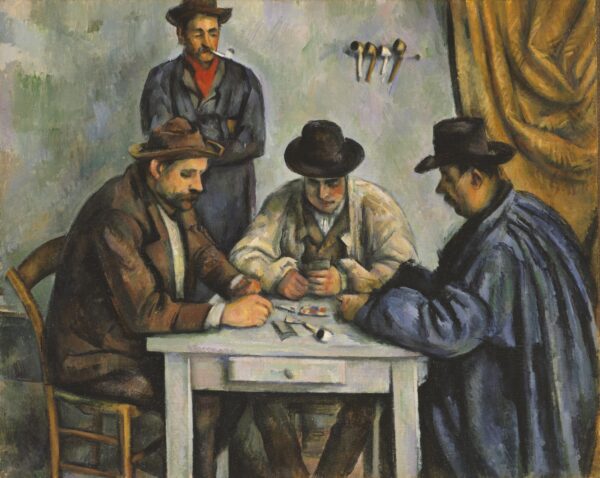
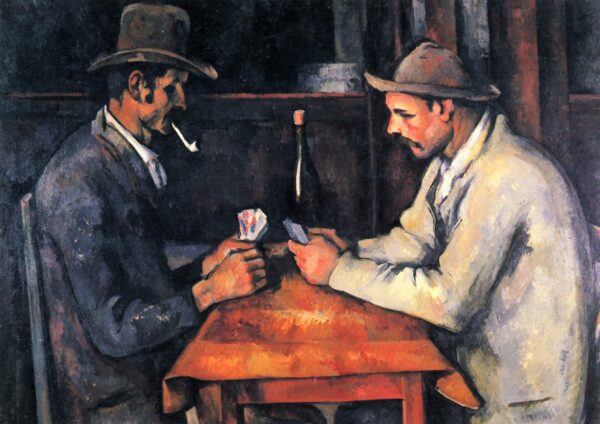
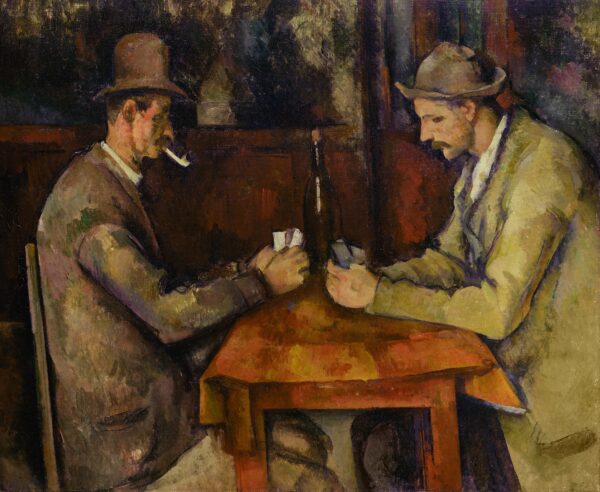
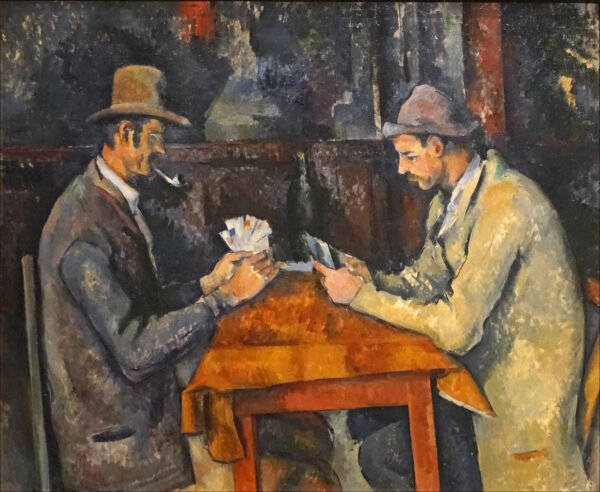
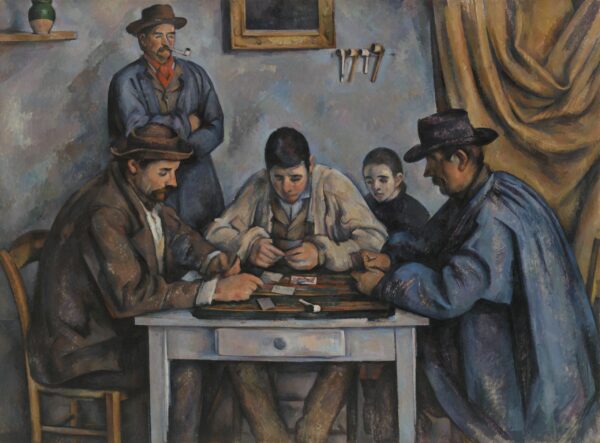
In the early 1890s Cézanne painted local farm workers from around Aix-en-Provence playing cards. The five paintings are among his best known figure pieces.
Looking for a painting that is not on this page? Search it by title. If it’s public domain, we paint it.
About the series
The Card Players is a series of five paintings by Paul Cézanne, made in the early 1890s near Aix-en-Provence. His models were farm hands and workers from the area around the family estate, the Jas de Bouffan, who sat for him at a table with their cards.
The versions differ in size and in the number of figures. The largest, with five figures, is in the Barnes Foundation in Philadelphia. A version with four figures is in the Metropolitan Museum of Art in New York. Three later versions show just two men facing each other across the table, with a bottle between them: one is in the Musée d'Orsay in Paris, one in the Courtauld Gallery in London, and one in a private collection. The mood is quiet and still, with no sign of the game's outcome.
The two-player versions are wide and fit well above a table or sideboard. The larger groups suit a big wall.