
Monet's Water Lilies
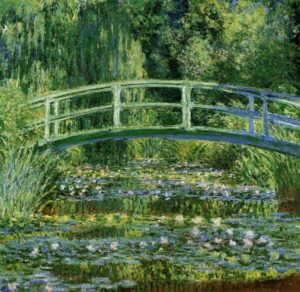
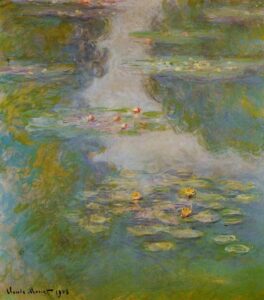
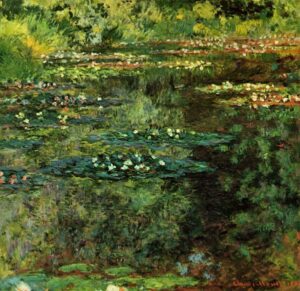
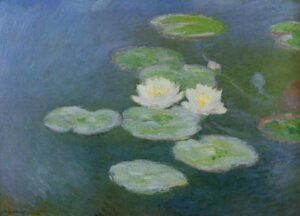
Monet painted the lily pond in his garden at Giverny for the last three decades of his life.
Looking for a painting that is not on this page? Search it by title. If it’s public domain, we paint it.
About the series
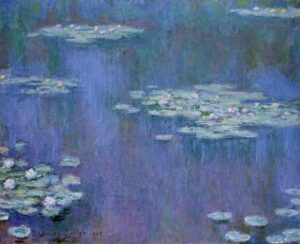
Water Lilies (Nymphéas) is the name given to about 250 paintings Claude Monet made of the pond he created in his garden at Giverny, in Normandy. He worked on the subject from the late 1890s until his death in 1926, studying the water surface, the reflected sky and the floating lily pads in every season and light.
The early canvases show the pond with its banks and the Japanese footbridge. Over time Monet moved closer, removed the horizon and let the water fill the whole picture. The largest works are the eight large compositions, each made of several panels, installed in two oval rooms at the Musée de l'Orangerie in Paris, opened to the public in 1927. Other versions hang in the Musée Marmottan Monet, the Museum of Modern Art in New York and many other museums.
Many Water Lilies canvases are close to square, which suits a single painting on a large wall. Two or three views in different light, hung side by side, echo the way Monet showed the series himself.